A reader got me thinking that simple math in Reaktor is used in some idiosyncratic ways and a tutorial on that might be useful, so here it is. I will have more for you soon!
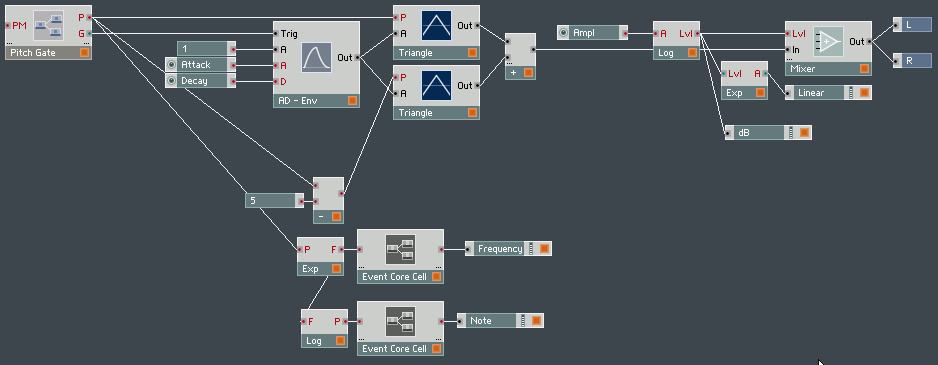
Edit: finally updated the link!
Also see this post on scaling values.

A reader got me thinking that simple math in Reaktor is used in some idiosyncratic ways and a tutorial on that might be useful, so here it is. I will have more for you soon!
Edit: finally updated the link!
Also see this post on scaling values.
If you’re visiting this blog for the first time, here are links to the posts with downloadable goodies – tutorial ensembles and PDFs.
This one doesn’t have a tutorial yet but it is a goodie:

This is a tutorial on using a few simple LFOs and a clock oscillator to gate an audio stream, creating semi-random and interesting percussive effects. Have fun with it – it won’t compose classical music for you but I hope it will liven up your music and teach you a few things about Reaktor. Remember, you have to noodle before you can fugue. Download Here.
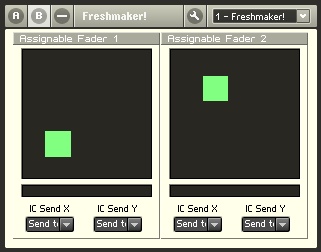
Here’s a fun new toy in the Reaktor library for you. It’s two recordable XY faders with IC send modules so you can send the controller info to another instrument in the ensemble. I’ve found it’s a great way to perk up a boring instrument without much effort and re-engineering. To demonstrate that, it’s wired up to control some of the knobs on an old FM synth from an earlier version of Reaktor. But of course, the whole point is to experiment and wire it up to whatever you please – maybe even something you’ve built yourself.
For my next tutorial, would you folks be interested in having this dissected and explained? There’s a lot going on under the hood in this one.
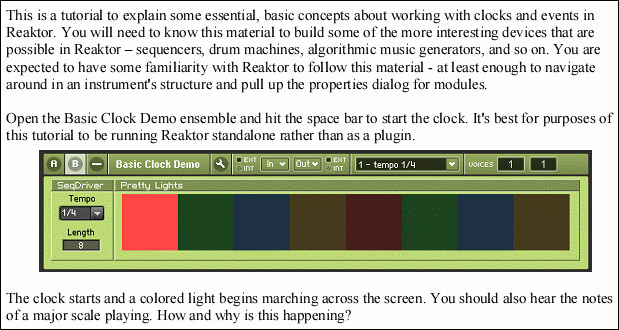
This covers some of the same territory as my Virtual Instruments tutorial but goes more in depth about the clock and modulo operations, as well as featuring a sequencer driver macro that syncs to the host.
Here’s the link – it contains the ensemble and an instructional PDF.
The instrument is very rudimentary. Don’t expect to make music with it. Expect to learn some essential Reaktor skills. I’ll be covering ways to use this knowledge in future tutorials. This will be on the exam, in other words. 😀
Questions and comments are welcome.